
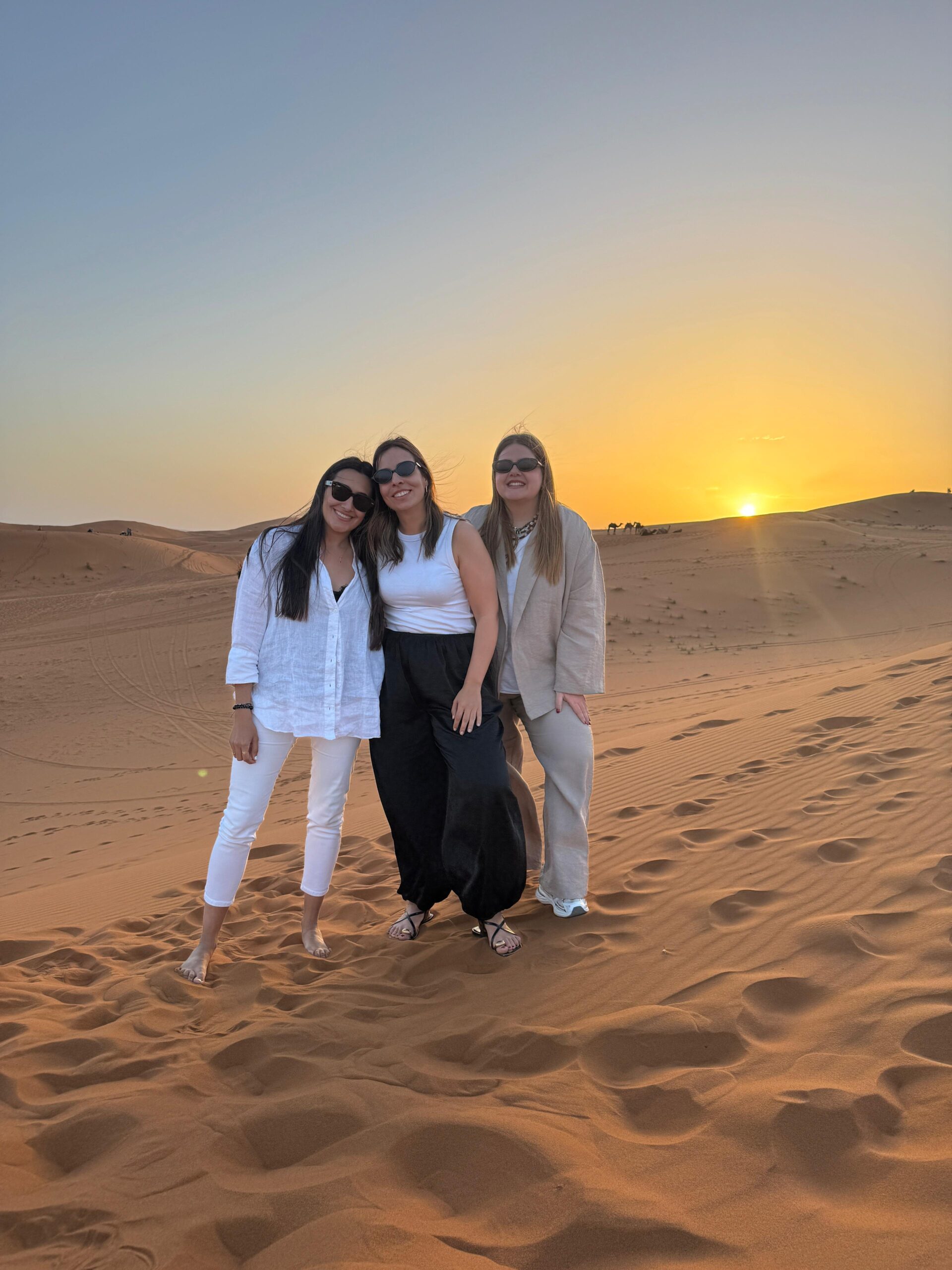
I’ve been doing this route for years with travelers from everywhere—Australia,UK.Uas Japan,europ, Brazil, you name it. And every single time, without fail, there’s this moment when they stop taking photos and just stare. That’s when I know the desert has started working its magic.
Four days is what I always recommend. Not because you can’t do it faster, but because rushing through this part of Morocco is like speed-reading a love letter. You’ll get the words but miss everything that matters.
The Mountain Crossing That’ll Make You Forget Marrakech
We leave Marrakech early. Like, before-the-mosque-calls early. The city is still shaking off sleep as we head south, and honestly, it’s the best time to escape. Within an hour, the red city walls are just a memory, and we’re climbing into the High Atlas through the Tizi n’Tichka pass.
Now, I’ve driven this road more times than I can count, and it still gets me. The way the road snakes up to 2,260 metres, the way the air gets crisp and clean, the way tiny Berber villages appear out of nowhere, clinging to hillsides like they’ve grown there. Because they have. Some of these places have been here for centuries, watching empires rise and fall while they just keep tending their goats and baking bread.
We stop whenever someone spots something worth stopping for. And trust me, on this road, that happens a lot. A herd of goats balancing on impossible cliffs. An old man selling honey at a roadside stand. The way the morning light hits the snow on Mount Toubkal. These aren’t in any brochure, but they’re the memories people carry home.
Ait Ben Haddou: More Than Just a Movie Set
By late morning, we roll into Ait Ben Haddou, and I always give people the same advice: ignore the crowds and just walk. Get lost in those narrow alleys. Touch the clay walls. Let yourself forget that Hollywood filmed “Gladiator” and “Game of Thrones” here.
Because here’s the thing—this place was standing long before Russell Crowe showed up. Berber families built it, grain by grain, using nothing but earth and water and generations of know-how. And they’re still here. Kids kicking footballs in dusty courtyards. Women hanging laundry from windows that have watched camel caravans pass for a thousand years.
Climb to the top and look out over the valley. That view hasn’t changed in centuries. Same river. Same mountains. Same feeling of being a tiny speck in a very old, very big world.
The Dades Valley: Where the Road Gets Dramatic
After Ait Ben Haddou, we pass through Ouarzazate—locals call it the “Gateway to the Desert,” but honestly, it’s more like the desert’s waiting room. The real show starts when we hit the Valley of the Roses and the Dades Valley.
This stretch is called the “Road of a Thousand Kasbahs,” and it earns the name. Every bend in the road reveals another ancient fortress, their red-brown walls blending so perfectly with the earth that you almost miss them. Almost.
If you’re lucky enough to come in spring, the air smells like roses. Not perfume-counter roses, but real ones, drying on rooftops, filling the valley with a scent so delicate you’ll keep catching whiffs of it for days afterward.
By evening, we drop into the Dades Gorges. The rock formations turn orange in the fading light—locals call them “Monkey Fingers,” and yeah, you’ll see why. We stay in a traditional inn built right into the mountainside. No TV. No Wi-Fi. Just the sound of the river and more stars than you’ve ever seen.
Todra Gorge: Walking Between Walls That Touch the Sky
Morning comes slow in the Dades. The light trickles down the cliffs like honey, and if you’re up early enough, you’ll spot local women herding goats along paths that look impossible to walk. They do it every day, without breaking a sweat.
Then we drive to the Todra Gorges, and honestly, this place is impossible to describe. The canyon narrows until the walls rise three hundred metres on either side. In some spots, they’re close enough that you could almost touch both sides at once.
Walking along the stream at the bottom, the water cold and clear, your footsteps echoing off the limestone—it’s the kind of quiet that makes you feel small in the best way possible. Climbers come from everywhere to scale these walls. Me? I’m happy just walking between them, looking up at the sky shrinking to a thin ribbon of blue.
Merzouga and the Erg Chebbi Dunes: Finally, the Desert
We stop near Erfoud, and I always point out the ground. See those spiral shapes? Fossils. Millions of years old. This whole desert was underwater once, and you can still see the evidence. Local artisans dig these out and polish them into jewellery and ornaments. A reminder that nothing stays the same forever.
Then we drive until the road just… stops. And there they are. The Erg Chebbi dunes. Morocco’s largest sea of sand.
No photograph prepares you for this. The dunes stretch to the horizon, golden and endless, shifting in the wind like a living thing. And late afternoon, when the light turns everything to honey, we climb onto camels and head into the dunes.
Look, I’ll be honest—camel riding isn’t comfortable. The animals rise with a lurch that throws you back in the saddle, and you’ll feel muscles you forgot you had. But the rhythm gets you. The silence, broken only by the creak of saddles and the whisper of wind across the sand. By the time we reach the camp, as the sun bleeds from gold to amber to deep purple, you’ll understand why people come back year after year.
Camp Life: Dinner, Drums, and More Stars Than You Can Count
The camp is simple. Tents. Carpets. A fire pit. But honestly? That’s all you need.
Dinner is tagine, cooked underground the way Berbers have been doing for centuries. The meat falls apart. The bread comes straight from the sand oven. And when the plates are cleared, the musicians start.
They play drums and sing songs passed down through generations. The rhythms are old—ancient even—and you’ll feel them in your chest before you understand them. Around the fire, strangers become friends. There’s something about being in the middle of nowhere that breaks down walls.
And the stars. I’ve been doing this for years, and the stars still get me. The Milky Way so bright it casts a shadow on the sand. Constellations you’ve only seen in books. You lie back and stare up, and for a moment, nothing else matters.
Sunrise and the Real Sahara
Wake up before dawn. Wrap yourself in a blanket. Climb the nearest dune. And watch the sun set the sand on fire—deep purple to fiery orange to soft gold.
This is the moment. The one people come for. The reason four days matters.
But the day’s just starting. After breakfast, we go deeper. We visit Khamlia, a village where the Gnawa people play music that traces back to West Africa. Metal castanets and skin drums. Rhythms so hypnotic you can’t help but move.
Then we visit a nomadic family. Their tent is basic—wool from their own goats, a fire for tea, a few possessions. But their hospitality? Unbelievable. Sitting on their carpets, drinking sweet mint tea, you realize that happiness isn’t about what you own. It’s about who you share it with.
The rest of the afternoon is yours. Walk the dunes. Try sandboarding if you’re brave. Or just sit and watch the light shift. No rush. The desert doesn’t hurry, and neither should you.
The Draa Valley: Bringing It All Home
The last day is for reflection. We drive west through the Draa Valley, Morocco’s longest river valley, a ribbon of green cutting through the desert. Palm groves. Ancient kasbahs. The kind of beauty that sneaks up on you.
We stop in Rissani, a town that once sat at the crossroads of the caravan trade. The market is raw and real—spices, leather, live chickens. No souvenirs. Just life happening. This is where the Alaouite Dynasty started, the same family that rules Morocco today.
Through Agdez and back to Ouarzazate, then over the Atlas one more time. By late afternoon, the chaos of Marrakech surrounds you—mopeds honking, spices in the air, the call to prayer echoing from the Koutoubia. It all feels different now. You’ve seen where the city’s heart beats. And somewhere inside you, a little piece of the Sahara stays.
Why Four Days? Let Me Tell You
I get asked this a lot. Why four days instead of three? Why not two?
Because four days gives you time. Time to stop rushing. Time to notice the small things. Time to let the desert get under your skin.
On this trip, you see mountains and valleys, gorges and dunes. You share tea with people who have nothing and give everything. You dance around a fire under a sky so full of stars it feels like you’re floating. And when you leave, you carry all of it with you.
This isn’t a holiday. It’s something deeper. And I promise you—long after the sand has washed out of your shoes, you’ll still feel it.
Want to experience this for yourself? Get in touch with Rachid Morocco Tours and let’s make it happen. The desert’s waiting, and honestly? It changes everyone who comes.



